Introduction
As the volume and diversity of available information
continue to expand, the potential for achieving more precise and reliable
outcomes likewise increases. However, the processing of such extensive datasets
demands considerable computational resources and time. Moreover, human
factors—including memory lapses, misinterpretation, cognitive biases, and
preconceived assumptions—introduce substantial risks of error and subjectivity,
thereby compromising the integrity of the analytical process [1–3]. The peer review of research proposals is no
exception to this vulnerability.
Research proposals serve as the foundational building
blocks upon which knowledge infrastructures are constructed. Consequently, the
quantity and quality of these proposals exert a direct and determinative
influence on the volume and rigor of published literature across all scientific
disciplines. The evaluation and scrutiny of research proposals represent one of
the most critical mechanisms for ensuring the quality control of disseminated
information, ultimately facilitating the accurate and valid transmission of
scientific knowledge [4, 5].
Billions of dollars are invested annually in health and
medical research worldwide, with funding distributed across numerous countries
and sponsoring organizations [6,
7]. In this context, the
meticulous appraisal of research proposals within the biomedical domain
constitutes a pivotal determinant of overall research quality—one that directly
shapes the trajectory of scientific and technological advancement in support of
public health and societal well-being [8].
For this reason, ethical considerations occupy a position of paramount
importance in medical research. It is imperative to ascertain that each
proposed study not only contributes meaningfully to the existing body of
knowledge and offers tangible benefits to the population but also rigorously
safeguards the safety and rights of participating individuals [9].
In recent years, the most widely adopted mechanism for
ensuring the quality of research proposals has been the peer review process.
Within this framework, submitted manuscripts are critically assessed by one or
more expert reviewers, whose primary objectives are to identify methodological
and substantive weaknesses and to recommend improvements that enhance the
overall quality of the work [10].
This system encompasses a structured set of procedures designed to provide
robust oversight and to assure the scientific validity and ethical soundness of
research prior to its execution [11].
Peer reviewers occupy a pivotal and indispensable role
within the manuscript evaluation and peer review system [12]. Indeed, in the trajectory
of generating and disseminating novel scientific findings, manuscripts that
have undergone rigorous peer scrutiny tend to exhibit superior quality and
credibility compared to those that have not [13]. The significance of this function is such that
readers consistently regard information derived from peer‑reviewed
sources as more trustworthy and valuable.
Nevertheless, the peer review system as applied to
research proposals is not without its inherent limitations [14]. The most frequently cited
shortcomings include its high cost, protracted timelines, and questionable
reliability; a conspicuous lack of transparency; a substantially stochastic
character; and a profoundly disappointing record in detecting errors and
factual inaccuracies. Moreover, evidence points to the presence of bias within
the process. Additional drawbacks encompass the influence of interpersonal
relationships and human behavioral factors on review outcomes, the considerable
time investment required, persistent biases and departures from impartiality,
and a chronic shortage of adequately trained and specialized experts to conduct
rigorous disciplinary reviews [14–16].
A substantial proportion of the terminology and
conceptual frameworks employed in the evaluation of research proposals are
characterized by imprecision, relativity, and a hybrid of subjective and
objective elements. Decision‑making frequently rests upon reviewers'
personal judgments, which are inherently susceptible to variability and may not
consistently reflect objective merit. Furthermore, it is methodologically
untenable to assign meaningful value to scholarly manuscripts solely on the
basis of a binary acceptance‑rejection scale; such an approach tends to
yield evaluative outcomes that are predominantly formalistic and
impressionistic rather than substantively grounded [17]. This concern is corroborated by a body of
empirical evidence indicating that assessment practices often lean toward
superficial and linguistically mediated criteria, which can significantly
distort the final evaluation results [4,
5, 18, 19].
The evaluation of research proposals for grant allocation
constitutes a profoundly complex problem, characterized by imprecise and often
incomplete information. Consequently, current assessment methodologies appear
to be inadequately suited to the task, and effective decision‑making in
this context necessitates the development of multi‑criteria models
capable of accommodating and processing uncertainty. Emerging approaches to
mathematical decision‑making and evaluation under conditions of
indeterminacy—such as fuzzy logic—offer a promising avenue for addressing this
challenge [20].
Fuzzy logic has been established as a robust and
effective tool for decision support systems operating in environments marked by
uncertainty [21]. In
recent years, its application has garnered increasing attention as an
innovative framework for the design of intelligent decision‑aid systems [22]. As a branch of artificial
intelligence, fuzzy logic possesses the unique capacity to model human
cognitive processes and to articulate vague, imprecise, or inherently uncertain
concepts in a mathematically tractable manner [23]. For these reasons, it is particularly well‑suited
to the evaluation of research proposals, which typically involve a
constellation of interrelated causal factors characterized by complexity,
ambiguity, and non‑deterministic properties [8].
Fuzzy systems are generally characterized as knowledge‑based
or rule‑based systems, founded upon a corpus of if–then production rules.
These rules are typically elicited from the expertise of domain specialists and
subsequently stored within the system's knowledge base. Fuzzy systems afford a
more precise and nuanced articulation of conditional reasoning, thereby
enabling a clearer and more rigorous analysis of if–then relationships. As a
multi‑valued logic, fuzzy logic bears a strong resemblance to human
reasoning and interpretative processes, and is commonly employed to represent
qualitative descriptors such as weak, moderate, good, very good, and similar
gradations. Importantly, this logic possesses the inherent potential to
integrate human heuristics and inferential patterns into computer‑based
decision support systems [22].
In contexts where less experienced reviewers are involved, this novel approach
can serve as a valuable adjunct to facilitate more accurate and consistent
evaluation and adjudication. A key distinguishing feature of fuzzy‑based
peer review, as compared with conventional review practices, lies in its
departure from absolute binary outcomes of unconditional acceptance or
rejection. Instead, the fuzzy paradigm accommodates conditional acceptance
contingent upon specified revisions and amendments. This nuanced framework
enables reviewers to render judgments regarding acceptance, rejection, or
revision with greater confidence, precision, and deliberative rigor [5].
Taken together, there exists a compelling imperative to
develop a comprehensive and standardized methodology for the peer review of
research proposals within the biomedical sciences, with the overarching aim of
enhancing both the quality and uniformity of the evaluation process. The
deployment of expert systems in this domain holds considerable promise as a
facilitative and supportive instrument. It is for this reason that the present
study was undertaken with the objective of designing a fuzzy logic‑based
decision support system for the peer review of medical research proposals. It
is anticipated that the findings of this investigation will provide a
foundational framework for the development of an appropriate and robust model
for the review process.
Moreover, it is hoped that the design and implementation
of such a system will assist journals in achieving more precise, consistent,
and equitable evaluations of submitted proposals. The distinctive contribution
of the proposed system resides in its capacity to enhance the accuracy,
productivity, and overall efficiency of research proposal assessment.
In a study conducted by Ayoobi Ardakan and colleagues,
which aimed to examine the impact and necessity of the peer review process in
monitoring the quality of published scientific works, the findings indicated that
two criteria—namely, "the originality and novelty of the research"
and "the relevance of the topic to the journal's thematic
scope"—exerted a significant influence on manuscript acceptance.
Furthermore, the editorial board was found to play a more pivotal role in the
review process than other evaluative criteria [4].
Vazirinejad and colleagues, in their investigation into
the accuracy of reviewers in identifying requisite revisions within a given
manuscript, reported that the process, structure, and inherent nature of peer
review are in need of substantial improvement and enhancement. Their findings
further suggested that the adoption of novel methodologies in this context
could prove effective in addressing these deficiencies [18].
In a separate study, Montazer sought to identify salient
qualitative concepts and translate them into quantifiable, measurable
indicators for the evaluation and peer review of scientific books. To this end,
he developed a structured and mechanized system grounded in the principles of
multivariate analysis and, ultimately, logical inferential reasoning. By
applying validated inputs to this system and assigning numerical values to each
parameter, it became possible to determine the relative value of a given book
and to conduct its peer review in a systematic and automated manner [5].
Khorshid and colleagues developed a multi‑objective
fuzzy mathematical model for the optimization of research project portfolios.
Owing to the application of mathematical modeling, the consideration of diverse
objectives, as well as organizational constraints, was facilitated with
relative ease within this framework. Ultimately, the model was solved using a
genetic algorithm [24].
Jafarinejad and colleagues designed a decision support model for the evaluation
of scientific‑research articles in the field of management. In this
model, evaluation indicators were weighted using the analytic hierarchy process
(AHP) in conjunction with the opinions of university faculty members, and
project selection was subsequently performed through zero‑one programming
[25]. Friedman, in an
examination of the peer review process for scientific articles, identified
reviewer expertise and experience as two critical determinants—both objective
and subjective—in the accurate assessment of manuscripts [26]. Khalili and colleagues
employed the TOPSIS method in combination with fuzzy goal programming for the
selection of multi‑objective projects (MOPS) within a multi‑period
planning horizon (MPPH) [27].
Tavana and colleagues utilized data envelopment analysis (DEA) and multi‑objective
fuzzy linear programming for projects involving advanced technology [28]. Chang and colleagues
applied fuzzy analytic hierarchy process (fuzzy AHP) and fuzzy data envelopment
analysis (fuzzy DEA) for the ranking and selection of new product development
(NPD) projects [29].
Material and Methods
This retrospective, cross‑sectional study was
conducted with the aim of designing a fuzzy evaluation and decision support
system for the peer review of research proposals.
In the first phase, a comprehensive questionnaire
comprising indicators and parameters relevant to the evaluation of research
proposals was developed. This instrument was constructed through an extensive
review of reputable scientific literature, adherence to the APA [30] and CAPRS‑CS [31] guidelines, and analysis of
existing review forms utilized at the Faculties of Paramedical Sciences of
Tehran University of Medical Sciences and Shahid Beheshti University of Medical
Sciences, as well as the Faculty of Management and Medical Informatics of Iran
University of Medical Sciences.
In the second phase, the questionnaire developed in the
preceding step was distributed among members of the Research Councils of the
aforementioned faculties, with the objective of determining the weight and
ranking of each parameter within the review process. Each parameter was
assigned a score on a 5‑point Likert‑type scale, ranging from 1
(least important) to 5 (very important). It should be noted that, owing to the
small size of the target population, the sample size was considered equivalent
to the entire statistical population—namely, all Research Council members of
the respective faculties—and consequently, no sampling procedure was performed.
Questionnaires were administered via electronic mail.
In the third phase, the knowledge base of the system was
populated with a set of if–then production rules derived from the expertise of
seasoned peer reviewers, specifically two members of the Research Council of
Iran University of Medical Sciences. The Mamdani inference method, which
represents the most widely employed approach in fuzzy system development [32], was adopted for fuzzy
inference. Based on the final set of parameters extracted from the preceding
stages, the system's inputs and the corresponding output—categorized as
acceptance, revision, or rejection—were defined. Membership functions were
correspondingly established using Gaussian functions. System implementation was
carried out in the MATLAB environment, version 2018a.
In the fourth phase, system evaluation was performed to
calculate accuracy and the area under the curve (AUC) using a collection of
review forms obtained from previously evaluated research proposals at the
aforementioned faculties. Specifically, ten review forms—complete with their
final outcomes—were gathered from each faculty, yielding a total of 30 forms.
System testing was conducted by comparing its outputs against the results
recorded on these review forms.
Results
In the first phase, a questionnaire comprising indicators
and parameters relevant to the peer review of research proposals was developed
through an extensive review of reputable scientific literature [21–23], adherence to the APA and CAPRS‑CS
guidelines, and analysis of existing review forms.
In the second phase, the questionnaire was distributed
via email to 35 members of the Research Councils of Iran University of Medical
Sciences, Tehran University of Medical Sciences, and Shahid Beheshti University
of Medical Sciences. A follow‑up reminder was sent one week later.
Ultimately, 27 individuals completed and returned the questionnaire, yielding a
response rate of 77.1%. The questionnaire employed a 5‑point Likert‑type
scale, and respondents were requested to assign a score to each criterion
ranging from 1 (low importance) to 5 (high importance). Table 1 presents the
demographic and professional characteristics of the expert participants in this
stage of the study.
Table 1: Demographic and Professional Characteristics
of Expert Participants in the Second Phase of the Study
|
Variable
|
N (%)
|
|
Gender
|
Male
|
18 (66.6)
|
|
Female
|
9 (33.3)
|
|
Years of Experience
|
< 10
|
5 (18.5)
|
|
10-20
|
19 (70.4)
|
|
>20
|
3 (11.1)
|
|
Academic Rank
|
Instructor
|
3 (11.1)
|
|
Assistant Professor
|
12 (44.5)
|
|
Associate Professor
|
9 (33.3)
|
|
Professor
|
3 (11.1)
|
Criteria with a mean score exceeding 3.5 were retained
for inclusion in the study. These comprised cost, objectives, study novelty,
literature review, statistical methods, and details of findings. Subsequently,
in consultation with two members of the Research Council of Iran University of
Medical Sciences—specializing in medical informatics and library and
information sciences—membership functions for the system parameters and output,
as well as the fuzzy inference rules, were determined. Fig 1 and 2 illustrate
the output membership functions and a sample of the rules defined within the
MATLAB environment, respectively.
To evaluate system performance, three independent
reviewers assessed a total of 30 research proposals. In order to minimize bias,
the consensus of their evaluations was compared against the system's output.
The results demonstrated that the system achieved an accuracy of 90%. In other
words, the system's output matched the consensus evaluation of the three
reviewers for 27 out of 30 proposals, indicating robust system performance.
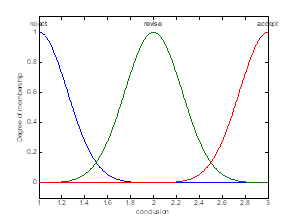 Fig 1: Membership
functions of the output variable for the research proposal peer review system.
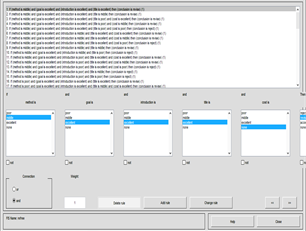
Fig 2: Sample rules employed in the research
proposal peer review system.
The receiver operating characteristic (ROC) curve depicts
sensitivity plotted against 1‑specificity. A curve positioned higher
above the diagonal, equivalently, a larger AUC indicates superior system
performance. For the proposed system, the AUC was calculated as 0.901. Fig 3
presents the ROC curve for the fuzzy expert system.
Discussion
Previous studies on the ranking and evaluation of
research proposals have employed techniques such as network analysis, balanced
scorecards, and grey theory [25,
33, 34]. However, these
investigations are subject to several limitations, including a high number of
criterion scales, insufficient elaboration of the criteria themselves, the
absence of a dedicated decision support system, and a lack of computer-based
implementation or the use of relevant software. These shortcomings may be
considered notable weaknesses when compared with the present study.
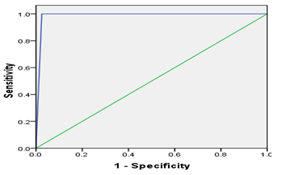
Fig 3: ROC curve for the research proposal peer
review system.
In a study [35],
a decision support system was designed for the evaluation and prioritization of
research projects, wherein the Utastare method was employed to determine the
final utility function of the problem. A significant drawback of that study was
the absence of fuzzy logic to incorporate the judgments of expert reviewers. In
contrast, the present study accords a pivotal role to expert opinions in the
prioritization and weighting of parameters, as well as in determining their
respective influences on the review outcome.
Several studies [29,
36–39] have predominantly focused
on the cost parameter—reflecting the economic dimension—in the evaluation and
peer review of research proposals. By contrast, the current study employs a
comprehensive prioritization and weighting framework for all parameters,
explicitly delineating the interrelationships among them and the relative
importance of each within the review process. This feature may be regarded as a
significant strength of the present work.
In other comparable studies [40, 41],
performance metrics such as accuracy, sensitivity, and precision were not fully
reported with respect to system testing. Consequently, it is difficult to draw
meaningful conclusions regarding the performance of those systems. An
examination of the proposals misclassified by our system revealed that two
cases, despite their adequate quality, were rejected owing to high costs, while
one case was rejected on the grounds of substantial deficiencies in the
presentation of the study methodology—yet was categorized by the system as
requiring revision.
Like any other investigation, the present study was
subject to certain limitations. The system was evaluated using research
proposals that had been previously peer‑reviewed at the three
universities upon whose Research Council members' opinions the system had been
originally designed. Evaluation of the system using proposals from other
universities and across a broader range of study types could yield more
comprehensive and generalizable results.
Conclusion
In the present study, a fuzzy logic‑based approach
was employed for the peer review of research proposals in the medical sciences.
The proposed system is capable of evaluating and adjudicating proposals by
classifying them into three categories: acceptance, revision, or rejection.
Ultimately, this framework facilitates the prioritization of proposals, enables
more effective resource allocation, and contributes to significant time savings
The rationale for employing fuzzy logic in the proposed
expert system lies in its capacity to utilize quantitative and measurable
indicators in contrast to qualitative, subjective, and objective
concepts—thereby rendering the review process more systematic and transparent.
Furthermore, the system's output can serve as a valuable decision support tool
to augment the logical reasoning of journal editorial boards. Additionally,
reviewers are likely to find the system more intuitive and acceptable in terms
of interaction and usability.
The system proposed in this study demonstrated favorable
levels of accuracy, precision, and sensitivity in its discriminatory
performance, indicating that it can be employed with a high degree of
confidence in practical settings.
In continuation of the present study, several
recommendations are proposed for the further development and enhancement of
fuzzy expert systems in the peer review process, with the aim of improving the
evaluation of research proposals.
Given the existence of organizational and cultural
variations, the fuzzy expert system could be implemented and validated across
diverse institutional settings to assess its robustness and generalizability.
Furthermore, the system could be augmented through integration with other
artificial intelligence approaches—such as machine learning and deep
learning—to potentially achieve superior performance outcomes.
Although the present study was specifically designed for
the evaluation of research proposals in the biomedical domain, the proposed
framework is adaptable to other scientific disciplines. Future investigations
may also consider comparing system outputs directly with human peer review
judgments to further establish its validity and utility.
Acknowledgement
The present study constitutes a component of the
principal investigator's research project (Project No. 27486), which was
supported by Iran University of Medical Sciences. The authors gratefully
acknowledge the financial and administrative support provided by the
university.
Author’s contribution
All authors contributed to the literature review, design,
data collection, drafting the manuscript, read and approved the final
manuscript.
Conflicts of interest
The authors declare no conflicts of interest regarding
the publication of this study.
Ethical Approval
This study was approved by the Research Ethics Committee
of Iran University of Medical Sciences (Ethical Code: IR.IUMS.REC.1394.26907).
Financial disclosure
No financial interests related to the material of this
manuscript have been declared.
AI Usage
Artificial intelligence tools were used exclusively for
grammar correction and language polishing. No AI was used for data analysis,
interpretation, or content generation. The authors assume full responsibility
for the final manuscript.
References
1.
Panjehpour M. Evaluation of scientometric published
articles by medical sciences researchers in Iranian and Pakistani journals
during 2004-2009. Quarterly Journal of Research and Planning in Higher
Education. 2010; 16(3): 107-23.
2.
Osareh F, Marefat R. Collaboration of Iranian
researchers in producing world science in medline (medicine and
interdisciplinary fields). Rahyaft. 2005; 35: 39-44.
3.
Ebrahimi S, Jowkar A. The situation of scientific publications
of Iranian’s universities of medical science on the basis of scientometrics qualitative
and quantitative indicators 1997-2006. Health Information Management. 2010; 7(3):
270-82.
4.
Abooyee Ardakan M, Mirzaie SA, Sheikhshoaei F. The peer-review
process for articles in Iran's scientific journals. Journal of Scholarly
Publishing. 2011; 42(2): 243-61.
5.
Montazer Gh, Bayat R. Reviewing the academic
literature modeling based on fuzzy logic. Quarterly Journal of Research and
Planning in Higher Education. 2002; 8(1): 1-26.
6.
Adam T, Ralaidovy AH, Ross AL, Reeder JC,
Swaminathan S. Tracking global resources and capacity for health research: Time
to reassess strategies and investment decisions. Health Research Policy and Systems.
2023; 21(1): 93.
7.
Gaind N. How the NIH dominates the world’s health
research: In charts. Nature. 2025; 639(8055): 554-5.
8.
Soares TG, Cham MFX, Wahyuningrum T, Abidin AZ.
Analytic Hierarchy Process and Multi-Factor Evaluation Process Methods for
Proposal Research Evaluation. Timor-Leste Journal of Engineering and Science.
2024; 4: 28-38.
9.
Kandi V, Vadakedath S. Ethical considerations in
clinical research: A comprehensive review. American Journal of Public Health Research.
2022; 10(2): 42-52.
10. Bunner
C, Larson EL. Assessing the quality of the peer review process: Author and
editorial board member perspectives. Am J Infect Control. 2012; 40(8): 701-4. PMID: 23021414 DOI: 10.1016/j.ajic.2012.05.012 [PubMed]
11. Alpert
JS. Peer review: The best of the blemished? Am J Med. 2007; 120(4): 287-8. PMID: 17398217 DOI: 10.1016/j.amjmed.2007.02.013 [PubMed]
12. Cho
YG, Park HA. Peer review process in medical journals. Korean J Fam Med. 2013; 34(6):
372-6. PMID: 24340158 DOI: 10.4082/kjfm.2013.34.6.372 [PubMed]
13. Hojat
M, Gonnella JS, Caelleigh AS. Impartial judgment by the “gatekeepers” of
science: Fallibility and accountability in the peer review process. Adv Health
Sci Educ Theory Pract. 2003; 8(1): 75-96. PMID: 12652170 DOI: 10.1023/a:1022670432373 [PubMed]
14.
Shepherd J, Frampton GK, Pickett K, Wyatt JC. Peer
review of health research funding proposals: A systematic map and systematic
review of innovations for effectiveness and efficiency. PLoS One. 2018; 13(5): e0196914.
PMID: 29750807 DOI: 10.1371/journal.pone.0196914 [PubMed]
15. Cookson
C, Jack A. Science stifled? Why peer review is under pressure. Financial Times.
2008.
16. Aczel
B, Barwich A-S, Diekman AB, Fishbach A, Goldstone RL, Gomez P, et al. The
present and future of peer review: Ideas, interventions, and evidence. Proc
Natl Acad Sci USA. 2025; 122(5): e2401232121. PMID: 39869808 DOI: 10.1073/pnas.2401232121 [PubMed]
17. Zhou
Q, Huang W, Zhang Y. Identifying critical success factors in emergency
management using a fuzzy DEMATEL method. Safety Science. 2011; 49(2): 243-52.
18. Vazirinejad
R, Rezaeian M, Taghavi M. Assessing peer reviewer comments on a Persian language
manuscript sent to an Iranian scientific journal, 2010. Journal of Rafsanjan
University of Medical Sciences. 2013; 12(2): 127-36.
19. Xue
N, Hao J-X, Jia S-L, Wang Q. An interval fuzzy ontology based peer review
assignment method. International Conference on Business Engineering. IEEE; 2012.
20. Alkan
N, Kahraman C. Continuous intuitionistic fuzzy sets (CINFUS) and their
AHP&TOPSIS extension: Research proposals evaluation for grant funding.
Applied Soft Computing. 2023; 145: 110579.
21. Safdari
R, Kadivar M, Langarizadeh M, Farzaneh Nejad A, Kermani F. Developing a fuzzy
expert system to predict the risk of neonatal death. Acta Inform Med. 2016; 24(1):
34-7. PMID: 27041808 DOI: 10.5455/aim.2016.24.34-37 [PubMed]
22.
Salari R, Langarizadeh M, Bahaaddin Beigi K,
Akramizadeh A, Kashanian M. Detecting of preeclampsia by expert system: A case
study in Tehran university of medical sciences hospitals. Payavard Salamat.
2016; 9(6): 556-65.
23. Çebi
A, Karal H. An application of fuzzy analytic hierarchy process (FAHP) for evaluating
students' project. Educational Research and Reviews. 2017; 12(3): 120-32.
24. Khorshid
S, Lucas C, Taslimi M, Jafarnejad A. A model of genetic fuzzy multi-objectives mathematical
programming for optimizing of research projects portfolio selection. Iranian
International Journal of Science. 2005; 6(2): 139-69.
25. Jafarnezhad
A, Rahbar AH, Moghadaspour S, Vahedi MM. Designing a decision making model to measure scientific research essays. Journal of Information
Technology Management. 2009; 2(4): 19-36.
26. Friedman
DP. Manuscript peer review at the AJR: Facts, figures, and quality assessment. AJR
Am J Roentgenol. 1995; 164(4): 1007-9. PMID: 7726010 DOI: 10.2214/ajr.164.4.7726010 [PubMed]
27. Khalili-Damghani K, Sadi-Nezhad S. A decision support system for
fuzzy multi-objective multi-period sustainable project selection. Computers
& Industrial Engineering. 2013; 64(4): 1045-60.
28. Tavana
M, Khalili-Damghani K, Sadi-Nezhad S. A fuzzy group data envelopment analysis
model for high-technology project selection: A case study at NASA. Computers
& Industrial Engineering. 2013; 66(1): 10-23.
29. Chiang
T-A, Che Z. A fuzzy robust evaluation model for selecting and ranking NPD
projects using Bayesian belief network and weight-restricted DEA. Expert
Systems with Applications. 2010; 37(11): 7408-18.
30. Bradley
L, Noble N, Hendricks B. The APA Publication Manual: Changes in the seventh
edition. The Family Journal. 2020; 28(2): 126-30.
31. Center
for Applied Research and Community Services (CAPRS-CS) [Internet]. 2003 [cited:
25 Jan 2026]. Available from:
https://dit.edu.tl/page-center-applied-research.html
32. Samad-Soltani
T, Ghanei M, Langarizadeh M. Development of a fuzzy decision support system to
determine the severity of obstructive pulmonary in chemical injured victims. Acta
Inform Med. 2015; 23(3): 138-41. PMID: 26236078 DOI: 10.5455/aim.2015.23.138-141 [PubMed]
33. Jafarnejad
A. TOPSIS method for ranking and selection research projects. Organizational
Culture Management. 2004; 2(1): 25-35.
34.
Barfod MB, Salling KB, Leleur S. Composite decision
support by combining cost-benefit and multi-criteria decision analysis.
Decision Support Systems. 2011; 51(1): 167-75.
35. Salati
F, Makouei A. Providing a decision support system for evaluation and prioritization
of research projects using the UTA method. International Industrial
Engineering Conference. 2013.
36. Huang
X, Xiang L, Islam SM. Optimal project adjustment and selection. Economic
Modelling. 2014; 36: 391-7.
37. Lee
JW, Kim SH. Using analytic network process and goal programming for
interdependent information system project selection. Computers & Operations
Research. 2000; 27(4): 367-82.
38. Badri
MA, Davis D, Davis D. A comprehensive 0–1 goal programming model for project
selection. International Journal of Project Management. 2001; 19(4): 243-52.
39. Sowlati T, Paradi JC, Suld C. Information systems project
prioritization using data envelopment analysis. Mathematical and Computer
Modelling. 2005; 41(11-12): 1279-98.
40. Reis
M, Ortega N, Silveira P. Fuzzy expert system in the prediction of neonatal
resuscitation. Braz J Med Biol Res. 2004; 37(5): 755-64. PMID:
15107939 DOI: 10.1590/s0100-879x2004000500018 [PubMed]
41. Matamoros
A, Torrealba A, Rivas F, González S, Sánchez R, Molina L, et al. Expert system
for the preeclampsia prevention program. WSEAS International Conference on Computational Intelligence. 2005.
 ,
Banafshe Maghsoudi3