Design and evaluation of a mobile-based self-care
application for chronic kidney disease patients
Maryam Jahany1 , Bahareh Marghoob2, Shadi Hazhir3, Vijayakumar
Varadarajan4, Seyed Ali Fatemi Aghda5,6*, Mohammad Hossein
Langarizadeh7
, Bahareh Marghoob2, Shadi Hazhir3, Vijayakumar
Varadarajan4, Seyed Ali Fatemi Aghda5,6*, Mohammad Hossein
Langarizadeh7
1Department of Health
Information Management, School of Health Management and Information Sciences,
Iran University of Medical Sciences, Tehran, Iran
2Hasheminejad Kidney
Center, Iran University of Medical Sciences, Tehran, Iran
3Student Research
Committee, Shahid Beheshti University of Medical Sciences, Tehran, Iran
4EAI Fellow,
Visiting Professor, School of Engineering ,University Of Diponegoro, Indonesia
5Student Research
Committee, Iran University of Medical Sciences, Tehran, Iran
6School of Public
Health, Shahid Sadoughi University of Medical Sciences, Yazd, Iran
7Department of
Computer Sciences, Faculty of Mathematics Sciences, Shahid Beheshti University,
Tehran, Iran
|
Article Info
|
A B S T R A C T
|
|
Article type:
Research
|
Introduction:
The global prevalence of chronic diseases, including chronic kidney disease
(CKD), is on the rise, leading to numerous challenges for patients, their
families, and governments. Mobile health interventions have the potential to
improve quality of life in chronic patients. This study aimed to design and
evaluate a mobile-based self-care application for CKD patients.
Material
and Methods: This study was conducted in three phases in 2024.
Initially, by reviewing previous studies and specialized guidelines, the
informational needs and capabilities of the self-care application were
extracted and validated through a questionnaire distributed to 25 physicians
and 15 CKD patients at teaching hospitals in Iran.
Then, the application was designed based on the validated needs using
Basic4Android (B4A) environment. The usability of the application was
evaluated by 60 patients using the user interface satisfaction (QUIS)
questionnaire.
Results:
The validated informational elements were categorized into five main domains:
clinical history, disease information, lifestyle, medication and application functions,
with 55 out of 61 items being approved. The usability evaluation of the
application, conducted by the patients, received an average score of
8.16±0.48 out of 9 and was reported to be good.
Conclusion:
The use of mobile health, taking into account the views of physicians and
patients, leads to better design, increased usability and user satisfaction
of the application.
|
|
Article
History:
Received: 2026-05-10
Accepted: 2026-06-29
Published: 2026-07-26
|
|
* Corresponding
author:
Seyed Ali Fatemi Aghda
Student Research Committee, School of Health
Management and Information Sciences, Iran University of Medical Sciences,
Tehran, Iran
Email: afatamy@gmail.com
|
|
Keywords:
Chronic Kidney Disease
Educational Needs Assessment
Mobile Health (mHealth)
Self-Management
Health Apps
Smartphone
|
|
Cite this paper as:
Jahany M, Marghoob B, Hazhir
S, Varadarajan V, Fatemi Aghda SA, Langarizadeh MH. Design
and evaluation of a mobile-based self-care application for chronic kidney
disease patients. Adv Med Inform. 2026; 2: 11.
|
Introduction
Chronic kidney disease (CKD) is a long-term condition
that leads to a gradual loss of kidney function. Over time, it can cause
irreversible physical and psychological complications. CKD is a prevalent and
costly health condition worldwide, The global prevalence of CKD is 13.4% [1]. The incidence of chronic
kidney failure is significantly increasing globally, particularly in developing
and emerging economies [2]. A global study estimates that
this number could reach 2.2 million by 2040. In Iran, research indicates that
over 14 million people suffer from this silent disease, with an annual increase
of 2% to 5% [3]. According to the National Kidney
Foundation, CKD progression is divided into 5 stages. Patients in stages 1-3
often experience minimal discomfort and mild symptoms such as fatigue and
nocturia [4]. However, if not properly managed, stages 4
and 5 can lead to impaired kidney function, resulting in heart failure,
hyperkalemia, central nervous system disorders, and ultimately, death [5].
The total annual cost of the End-stage renal disease
(ESRD) program in the United States is approximately $66,000 per patient [1]. The annual cost per hemodialysis session in Iran is
estimated at $12,500 [6]. The prevalence of CKD is steadily
rising due to increasing rates of diabetes, hypertension, and an aging
population [3]. It is a significant risk factor for
cardiovascular diseases and imposes a substantial physical and psychological
burden on patients, leading to negative emotions [7].
Prevention and management of complications are crucial for delaying the
progression of chronic kidney disease. Due to the chronic nature of the
disease, the patient requires continuous care, consumption of various
medications, and lifestyle modification [8].
Self-management, as an active and informed patient involvement in their
treatment, is an integral part of their lives. In recent decades, educational
approaches have undergone significant changes with the emergence of new
technologies [9]. Today, the rapid growth of information
and communication technology (ICT) has significantly impacted all aspects of
human life. The achievements of ICT in healthcare include improving patient
safety, optimizing management, and increasing access to healthcare services,
enhancing the quality of care, reducing costs, and improving decision-making
processes [10-12]. Traditional
education is limited by time and place, whereas the use of technological tools
like mobile phones, which do not have such constraints, is transforming the
education system. These tools can improve teaching techniques and quality, as
well as increase motivation for continuous learning. Mobile applications, with
their unique features such as clinical awareness, medication reminders, and
tracking of daily nutrition and activities, facilitate improved self-management
[13, 14].
The number of CKD patients is currently increasing,
leading to a decline in service quality, patient confusion, and increased
economic burden on families and limited service providers. Moreover, given the
chronic nature of the disease and the lack of knowledge and awareness among CKD
patients, they require increased knowledge and self-management skills to
properly manage their condition. The growing use of mobile phones and the
important role of applications in health and self-care facilitate patient education.
Based on current research, no study in Iran has focused on the design and
evaluation of a self-care application for chronic kidney disease patients.
Therefore, considering the significant impact of various parameters such as
genetics, race, and ethnicity, it seems essential to design, implement, and
evaluate a self-care application based on the perspectives of both patients and
physicians.
Material and Methods
This research is a cross-sectional study and was
conducted in three steps.
The questionnaire was designed based on previously
validated instruments [13, 15-18]. To gather essential needs for an application for chronic
patients, literature review done with keywords: mobile applications, chronic
kidney disease, self-care, mhealth, mobile phone, Cellphone, Application OR
Software, self-management. Subsequently, specialized guidelines on chronic
kidney disease, such as KDIGO (Kidney Disease: Improving Global Outcomes),
KDOQI (Kidney Disease Outcomes Quality Initiative), and UK Renal Association
Guidelines, were reviewed. Based on the results, a questionnaire was designed
to determine the informational elements and capabilities of the application.
This questionnaire included two sections: demographic information of
participants, informational needs and application capabilities. The section on
informational needs and application capabilities of the application included 5
subsections: Clinical History, Disease Information, Lifestyle, Medication, and
Application Functions. Face validity and content validity (CVR = 0.81) of the
questionnaire were confirmed by 8 experts in health information management and
nephrology, and reliability was confirmed with a Cronbach's alpha of 0.83. A total of 25 nephrology specialists and subspecialists
from Iran University of Medical Sciences and
Kurdistan University of Medical Sciences were selected through simple
random sampling from departmental faculty lists. Additionally, 15 patients with
chronic kidney disease (CKD) were randomly chosen from the outpatient registry
of nephrology clinics using a Simple random sampling. Responses to the questionnaire
Items were scored from 1 to 5 (very low = 1, low = 2, moderate = 3, high = 4,
and very high = 5). Determining whether the items were essential or inessential
was as follows: An item was considered essential if it scored at least 3.57
(75% of the maximum score). When physicians and patients disagreed, the average
of their two scores was used to decide whether the item was essential. After
completing and returning the questionnaire by all participants, data collection
was completed. Data analysis was performed using SPSS version 21 and based on
descriptive statistics (mean and standard deviation).
The application was designed and Implemented based on the
identified needs in the first stage. First, menus, pages, and program
functionality were reviewed and approved by experts (health information
management and medical informatics). Then, a prototype of the application was
designed using Java in the Basic4Android software environment. After evaluation
by the research team, the final version was designed.
The usability of the application was evaluated using the
Questionnaire of User Interface Satisfaction (QUIS). This questionnaire
includes 5 sections: overall reaction to the software, screen, terminology and
system information, learning, and system functions. The
validity and reliability Persian version of the QUIS questionnaire, previously
used in similar studies were employed in this study [19,
20]. Following final approval of
the application and after obtaining informed consent, the app was installed on
the mobile phones of 60 patients with chronic kidney disease (CKD) who were
admitted to the nephrology ward of Rasool Akram Hospital. Eligible patients
were selected through simple random sampling from the hospital’s outpatient
registry using a Random number table to ensure unbiased selection. Then,
after teaching how to use the application, the participants were asked to
complete the usability questionnaire after using it for two weeks. The results
from the questionnaire were categorized into three levels (score of 0-3 for
poor, 3.33-6 for average, and 6.67-9 for good). Data analysis of the
evaluations, like the first stage, was done descriptively (mean and standard
deviation) using SPSS version 21.
Results
In this study, most patient participants were male (n=9,
60%) and aged 60 years and above (n=7, 46.6%). The majority of patients (n=12,
80%) had a diploma or less. Most patients had a disease history of 10-19 years
(n=5, 33.3%). Most participating physicians were male (n=21, 84%) and
predominantly in the 40-50 age group (n=12, 48%). The majority of physicians
worked at Iran University of Medical Sciences Hospital (n=16, 64%). In this
study, most physicians specialized in nephrology (n=15, 60%) and had 10-14
years of experience (n=8, 32%) (Table 1).
Table 1: Demographic characteristics of participants
|
Patients
|
Variable
|
Category
|
N (%)
|
|
Gender
|
Female
|
6 (40)
|
|
Male
|
9 (60)
|
|
Age
|
Less than 30 years
|
1 (6.7)
|
|
30-39 years
|
1 (6.7)
|
|
40-49 years
|
3 (20)
|
|
50-59 years
|
3 (20)
|
|
60-69 years
|
5 (33.3)
|
|
70 years and above
|
2 (13.3)
|
|
Education
|
Below Diploma
|
6 (40)
|
|
Diploma
|
6 (40)
|
|
Bachelor's Degree
|
1 (7)
|
|
Master's Degree
|
2 (13)
|
|
Disease Duration
|
Less than 5 years
|
4 (26.7)
|
|
5-9 years
|
3 (20)
|
|
10-19 years
|
5 (33.3)
|
|
20 years and above
|
3 (20)
|
|
Physicians
|
Gender
|
Male
|
21 (84)
|
|
Female
|
4 (16)
|
|
Age
|
Less than 40 years
|
5 (20)
|
|
40 to 50 years
|
12 (48)
|
|
Above 50 years
|
8 (32)
|
|
Specialty
|
Nephrology & Urology
|
15 (60)
|
|
General Practitioner &
Surgeon
|
10 (40)
|
|
Workplace
|
Iran University of Medical
Sciences.
|
16 (64)
|
|
Kurdistan University of Medical
Sciences
|
9 (36)
|
|
Work Experience
|
Less than 5 years
|
2 (8)
|
|
5-9 years
|
4 (16)
|
|
10-14 years
|
8 (32)
|
|
15-19 years
|
6 (24)
|
|
20 years and above
|
5 (20)
|
The self-care needs addressed by the chronic kidney
disease mobile application were designed based on five domains: clinical
history, disease information, lifestyle, medication, and application functions
(as summarized in Table 2-6). Both physicians and patients identified 55 out of
61 informational and functional needs as essential.
Table 2: Average ratings of participant’s responses
about the clinical history
|
Items
|
Physicians
|
Patients
|
|
Mean
|
SD
|
Mean
|
SD
|
|
Time of Diagnosis
|
5
|
0
|
5
|
0
|
|
Treatment Start Time
|
5
|
0
|
5
|
0
|
|
Kidney Disease Stage
|
5
|
0
|
5
|
0
|
|
Medical History
|
5
|
0
|
5
|
0
|
|
Hypertension
|
4.8
|
0.12
|
4.3
|
0.47
|
|
Diabetes
|
4.8
|
0.09
|
3.9
|
0.89
|
|
History of tobacco use
|
4.3
|
0.47
|
3.9
|
1.05
|
|
History of drug use
|
4.1
|
0.63
|
2.9
|
1.6
|
|
History of alcohol use
|
4.2
|
0.48
|
3.5
|
1.25
|
|
Kidney Disease Medication
|
5
|
0
|
5
|
0
|
|
Drug Allergy
|
5
|
0
|
5
|
0
|
|
Excessive Sleep and Fatigue
|
5
|
0
|
4.6
|
0.17
|
|
Proteinuria
|
5
|
0
|
4.1
|
0.8
|
|
Elevated Creatinine
|
5
|
0
|
4.3
|
0.5
|
|
Urine Color
|
5
|
0
|
3.8
|
0.95
|
|
Edema of the extremities and face
|
5
|
0
|
4.1
|
0.73
|
|
Changes in Urination Frequency
|
5
|
0
|
4.5
|
0.38
|
|
Note:
Data presented as Mean ± Standard Deviation (SD). Ratings were based on a
5-point Likert scale (1 = Strongly Disagree, 5 = Strongly Agree)."
|
Table 3: Physician and patient ratings on disease
knowledge and awareness
|
Items
|
Physician
|
Patients
|
|
Mean
|
SD
|
Mean
|
SD
|
|
Understanding the structure and
function of the kidney
|
4
|
0.79
|
3.4
|
1.26
|
|
Knowledge of Damage Prevention of
kidney
|
5
|
0
|
5
|
0
|
|
Knowledge of Different Types of
Kidney Disease
|
5
|
0
|
5
|
0
|
|
Understanding of Disease Causes
|
5
|
0
|
5
|
0
|
|
Understanding of Disease
Progression Stages
|
5
|
0
|
5
|
0
|
|
Awareness of Disease
Complications
|
5
|
0
|
5
|
0
|
|
Awareness of Diagnosis Methods
|
5
|
0
|
5
|
0
|
|
Knowledge of Clinical, Care, and
Treatment Approaches
|
5
|
0
|
5
|
0
|
|
Awareness of Prevalence
|
5
|
0
|
5
|
0
|
|
Education on Self-Care after
Kidney Failure
|
5
|
0
|
5
|
0
|
|
Note:
Data presented as Mean ± Standard Deviation (SD). Ratings were based on a
5-point Likert scale (1 = Strongly Disagree, 5 = Strongly Agree)."
|
Table 4: Physician and patient ratings on lifestyle
management
|
Items
|
Physician
|
Patients
|
|
Mean
|
SD
|
Mean
|
SD
|
|
Consumption of Major Food Groups
(grains, fruits, vegetables, meat, dairy)
|
5
|
0
|
5
|
0
|
|
Low-Sodium, Low-Phosphorus Diet
|
5
|
0
|
4.8
|
0.08
|
|
Balanced Diet
|
5
|
0
|
4.4
|
0.62
|
|
Dietary
Diversity
|
5
|
0
|
3.7
|
1.24
|
|
Avoiding Processed Foods and Fast
Food
|
5
|
0
|
5
|
0
|
|
Antioxidant-Rich Diet
|
5
|
0
|
5
|
0
|
|
Consumption of Vitamin D and
Omega-3
|
5
|
0
|
5
|
0
|
|
Protein Restriction
|
4.3
|
0.48
|
3.8
|
1.18
|
|
Managing Potassium, Phosphorus,
Sodium, and Protein Intake
|
5
|
0
|
4.5
|
0.49
|
|
Limiting Sugar and Sweet Drinks
|
3.9
|
0.64
|
5
|
0
|
|
Following a Personalized Diet
Plan
|
5
|
0
|
3.9
|
0.83
|
|
Number of meals per day
|
3.6
|
1.2
|
2.7
|
1.68
|
|
Regular Physical Activity
|
4.6
|
0.18
|
4.2
|
0.74
|
|
Weight Management
|
4.2
|
0.61
|
4.4
|
0.43
|
|
Physical Activity
|
4.3
|
0.69
|
3.9
|
1.16
|
|
Sleep Duration
|
4.6
|
0.28
|
4.1
|
0.74
|
|
Social Connections
|
4
|
0.74
|
4.8
|
0.13
|
|
Physical and Mental Health
|
4.2
|
.78
|
5
|
0
|
|
Note:
Data presented as Mean ± Standard Deviation (SD). Ratings were based on a
5-point Likert scale (1 = Strongly Disagree, 5 = Strongly Agree)."
|
Table 5: Physician and patient ratings on medication
adherence and knowledge
|
Items
|
Physician
|
Patients
|
|
Mean
|
SD
|
Mean
|
SD
|
|
Correct use of medication (ACE
inhibitors or ARBs)
|
4.3
|
.68
|
3.8
|
0.98
|
|
Drug Knowledge
|
4.8
|
0.15
|
4.1
|
0.85
|
|
Drug Side effects
|
5
|
0
|
5
|
0
|
|
Drug Interactions
|
5
|
0
|
4.6
|
0.18
|
|
correct method of use
|
5
|
0
|
5
|
0
|
|
Dosage
|
5
|
0
|
5
|
0
|
|
Note:
Data presented as Mean ± Standard Deviation (SD). Ratings were based on a
5-point Likert scale (1 = Strongly Disagree, 5 = Strongly Agree)."
|
Table 6: Physician and patient
ratings on application functions
|
Items
|
Physicians
|
Patients
|
|
Mean
|
SD
|
Mean
|
SD
|
|
Patient Demographic Information
(Name, Surname, Family Medical History, Kidney Disease Severity (1-5), Age,
Gender, Ethnicity, Occupation, Marital Status, Place of Residence)
|
5
|
0
|
5
|
0
|
|
Recording
and Viewing (Blood Pressure, Cholesterol,
Medication, Test Results,
Physician Visits)
|
5
|
0
|
5
|
0
|
|
Reminder (Physician Appointments,
Medication Usage)
|
5
|
0
|
5
|
0
|
|
Security and Privacy
|
3.6
|
0.53
|
4.3
|
0.31
|
|
Educational Videos
|
3.3
|
1.17
|
4.1
|
0.29
|
|
Reporting (Blood Pressure,
Cholesterol)
|
4.6
|
0.32
|
5
|
0
|
|
Customization of App Interface
|
4.1
|
0.84
|
4.4
|
0.54
|
|
Introduction of Specialized
Medical Centres and physicians
|
3.9
|
0.49
|
4.2
|
0.76
|
|
Interpretation of Laboratory Data
|
3.1
|
0.75
|
3.7
|
0.82
|
|
Communication with peers
|
3.8
|
0.68
|
3.5
|
0.48
|
|
Note:
Data presented as Mean ± Standard Deviation (SD). Ratings were based on a
5-point Likert scale (1 = Strongly Disagree, 5 = Strongly Agree)."
|
From the perspectives of both patients and physicians,
the average importance score for educational content in the "Clinical
History" domain was 4.84 and 4.34, respectively.
While there was general agreement between physicians and
patients, there was a disagreement regarding the "History of drug use” and
“History of alcohol use" components. Based on the average scores of
physicians and patients, the “History of alcohol use” component in a mobile
application was deemed inessential (average score 3.5 out of 5). From the
perspectives of both patients and physicians, the average score for educational
content in the "Disease Information" domain in the application was
4.84 and 4.90, respectively. This domain received the highest average score
among all other domains in the questionnaire. Except for the component
"understanding the structure and function of the kidneys," all items
within this domain achieved the highest average scores. There was a
disagreement between physicians and patients regarding the 'understanding the
structure and function of the kidneys' component, which ultimately was not
considered essential, with an average score of 3.7 for both groups.
Within the "Lifestyle" domain, most items were
deemed essential. The average score for this domain was 4.56 and 4.11 for
physicians and patients, respectively. The component “Amount of meals per day”
was considered inessential by both groups. There was disagreement between
physicians and patients regarding the item "Dietary Diversity”. After
checking the average score, it was found with average scores of 4.35. All items
of the "Medication" domain were considered essential by both
physicians and patients, with average scores of 4.85 and 4.53, respectively.
The items of "drug side effects, correct method of use, and dosage"
received the highest scores from both groups.
In the "Application Functions" domain, the
average scores were 4.14 and 4.42 for physicians and patients, respectively.
The items of "patient demographic information, reminders, recording and viewing”
received the highest scores from all participants. There was a difference of
opinion between physicians and patients regarding the items of "security
and privacy, educational videos, communication with peers." Based on the
average scores, the "security and privacy" component was deemed
essential with an average of 3.95, while the "educational videos" and
"communication with peers" items were considered inessential with
average scores of 3.7 and 3.65, respectively. The "interpretation of
laboratory data" component was deemed inessential by both groups.
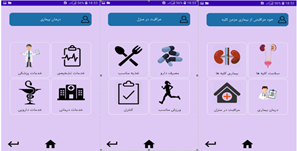
Considering that the self-care mobile application for
chronic kidney disease patients was based on the Android operating system, the
Java programming language was used within the Basic4Android (B4A) environment
(Fig 1). After designing and approving the final prototype of the mobile
application, it was provided to 60 chronic kidney disease patients for
usability evaluation (Table 7).
Fig 1: Some views of the designed application
Table
7: Demographic characteristics of patients participating in the
evaluation phase
|
Variable
|
Group
|
n
|
%
|
|
Gender
|
Male
|
37
|
61.6
|
|
Female
|
23
|
38.4
|
|
Age
|
Under 30 years
|
3
|
5
|
|
30-39 years
|
5
|
8.3
|
|
40-49 years
|
17
|
28.4
|
|
50-59 years
|
21
|
35
|
|
60-69 years
|
8
|
13.3
|
|
70 years and over
|
6
|
10
|
|
Education
|
Below Diploma
|
17
|
28.4
|
|
Diploma
|
27
|
45
|
|
Bachelor's
|
10
|
16.6
|
|
Master's
|
6
|
10
|
|
Duration of Illness
|
Less than 5 years
|
4
|
6.6
|
|
5-9 years
|
19
|
31.7
|
|
10-19 years
|
28
|
46.7
|
|
20 years and more
|
9
|
15
|
The evaluation results were obtained using the QUIS
questionnaire (Table 8). The average score obtained in
the five domains was (8.16 ± 0.48; 95% CI: 8.04–8.28), which is considered
good. The highest average usability score was for the "Screen
functions" domain (8.5 ± 0.28; 95% CI: 8.43–8.57), and the lowest average
score was for the "Terminology and System Information" domain (7.9 ±
0.7; 95% CI: 7.72–8.08).
Discussion
The aim of this study was to design and evaluate a
mobile-based self-care application for patients with CKD. The findings
indicated that among 61 identified informational and functional items, 55 (over
90%) were confirmed as essential by both physicians and patients. Furthermore,
the usability evaluation of the developed application using the QUIS
questionnaire showed a mean score of 8.16 out of 9, which falls within the
“good” range and reflects a high level of user satisfaction and a user-friendly
design. The highest score was obtained in the “Screen” domain, whereas the
lowest score was related to “Terminology and System Information.” These results
suggest that the design of mobile health applications through active user
participation (particularly the involvement of both physicians and patients)
can substantially enhance user interface quality, acceptance, and overall
patient satisfaction.
Table
8: Mean score of participants' answers to the usability questionnaire
|
Scale
|
Mean
|
Standard Deviation
|
Satisfaction Level
|
|
Overall Reactions to the Software
|
8
|
0.4
|
Good
|
|
Screen functions
|
8.5
|
0.28
|
Good
|
|
Terminology And System
Information
|
7.9
|
0.7
|
Good
|
|
Learnability of the program
|
8.3
|
0.43
|
Good
|
|
System Capabilities
|
8.1
|
0.61
|
Good
|
|
Average Overall Rating
|
8.16
|
0.48
|
Good
|
|
Note:
Data presented as Mean ± Standard Deviation (SD). Ratings were based on a
10-point Likert scale (0 = Strongly Disagree, 9= Strongly Agree)."
|
According to the authors' information, no application
based on mobile phones has been carried out in Iran considering the self-care
needs of these patients. Sheikhtaheri et al. identified 16 key parameters in
chronic kidney disease, including age, systolic blood pressure, diastolic blood
pressure, calcium, and phosphorus levels, history of hypertension, diabetes,
and family history of CKD [15]. Borhani et al. developed
and evaluated a mobile application to investigate survival rates after kidney
transplantation. The results indicated the impact of body mass index, advanced
stages of the disease, gender, and other factors on post-transplant survival [21]. The use of mobile health and applications has enhanced
patients' roles in disease management, increased patient satisfaction, and
improved self-care outcomes [7, 22]. Common
challenges faced by CKD patients in studies include impaired kidney function,
multiple medication use, and frequent visits to healthcare facilities.
Telemedicine has facilitated easy access to healthcare, promoted health equity,
and enhanced individuals' education and skills [23, 24]. A systematic review and meta-analysis conducted by Peng
and colleagues demonstrated that self-care among non-dialysis CKD patients
resulted in improved physical activity, blood pressure control, C-reactive
protein levels, and reduced urinary protein. These benefits were observed
within a one-year timeframe. However, self-care was not significantly
associated with other kidney benefits or outcomes, such as reduced CKD-related
mortality [25].
Overall, studies have shown varying results regarding the
impact of mobile health on improved disease management and increased awareness.
Study [26] found no significant effect of mobile health on
medication adherence or reducing the burden of kidney disease, while studies [17, 27] demonstrated a positive impact
of mobile health on medication adherence. These discrepancies can be attributed
to limitations in the studies, such as sample size, genetics, ethnicity, and
confounding variables. Therefore, in the current study, an attempt has been
made to collect data on a wider range of parameters using a questionnaire.
The study by Collado-Borrell et al. demonstrated that
mobile applications led to improved condition management. In addition to
reducing complications and hospital resource utilization, these applications
resulted in better medication adherence and improved quality of life for
patients [8]. Li et al. in their evaluation of digital
health interventions (DHIs), found that this technology had a positive impact
on health-related quality of life (HRQoL), lifestyle, and improved physical
activity [28]. Ong et al. investigated the effectiveness
of two applications, eKidneyCare and MyMedRec, for medication management
(dosage, timing, interactions, and side effects). The results showed that
eKidneyCare significantly improved drug interactions and medication management [29].
Most studies have shown that mobile health (mobile
phones, telemedicine) can increase knowledge, improve self-care, and enhance
treatment outcomes. This aligns with the objectives of the current study, which
aims to design and evaluate a mobile application for CKD patients.
Ong et al.’s study examined the impact of a self-care
application on the care of CKD patients. This application included items for
monitoring vital signs, symptoms, medication and treatment management, and
laboratory result evaluation and follow-up. The results showed an improvement
in the identification of medication discrepancies and errors [10].
Yan Du et al. conducted a study examining online forum posts from CKD patients.
The results were categorized into several domains. The challenges expressed
included comorbidities (diabetes, hypertension, misdiagnosis of CKD with
similar diseases), symptoms (fatigue, stress, anxiety, tiredness, itchy skin,
and general discomfort), disease management (diet, exercise, medications,
supplements, and lifestyle), and the effects of CKD on work, stress, emotions,
and family [16]. Neale et al., in their systematic review
and meta-analysis, investigated the impact of lifestyle on risk factors and the
progression of CKD. Results showed that lifestyle interventions had a
significant impact on various aspects of life, including cognitive function,
physical function, vitality, mental function, fatigue, sleep, social
interaction quality, and work status in CKD patients [13].
Chae et al. designed and evaluated a self-management mobile application (SMA)
for adult peritoneal dialysis patients. This app included self-management
information for patients, such as medication and health behaviors, exercise,
diet, etc. The evaluation was conducted in three domains: assessment of
self-management knowledge, health behaviors, and biomarkers, as well as
health-related quality of life (HRQoL). The results showed improvements in
knowledge and health behaviors related to albumin and hemoglobin and an
improvement in the HRQoL index [30]. In line with previous
studies, the expressed educational needs and functionalities of the application
were collected and categorized into five domains after analysis. These were
then presented to experts and patients for validation.
Ong et al. reported that the 'Kidney Health Digital
Counseling Program' (ODYSSEE Kidney) encouraged CKD patients to engage in
self-care and improve their disease management. The identified information
needs of this program were categorized into three domains: disease content,
nephrology care, and technical features. Evaluation results showed that
participants were satisfied with the self-care content, the app's layout, and
described its impact on managing their condition as valuable [31].
Tsai et al. used the iCKD app to investigate the knowledge and self-care
behaviors of CKD patients. The app included domains on information needs such
as risk factors and complications of the disease, symptoms, understanding
kidney function, nutrition education (dos and don'ts), demographic
characteristics (gender, education level, age, smoking, alcohol consumption,
marital status), and clinical characteristics (history of heart disease and
diabetes, antihypertensive medication use, initial diagnosis, and duration of
treatment for CKD). Its features included interpreting test results, care and
treatment alerts, a personalized dashboard, educational videos, outpatient
visit reminders, and warning tracking. Self-care assessment of patients was
done through interviews and the CKD Self-Care (CKDSC) questionnaire. Results
showed that the use of mHealth by CKD patients increased their knowledge level
but did not lead to improved self-care behaviors [18].
Liu et al., using the KidneyOnline mobile app and
artificial intelligence, provided early warnings, lifestyle intervention
suggestions, and personalized follow-up plans for CKD patients. Study results
showed that continuous online follow-up led patients to adhere to medication
regimens, engage in physical activity, maintain a healthy BMI, adopt healthy
eating habits, quit smoking, and overall lead a healthier lifestyle, resulting
in a significant reduction in adverse disease outcomes [32].
El Khoury's study evaluated a dietary mobile app that provided nutrition
education through guidelines, podcasts, and notifications. The app's usability
and acceptability were assessed using the User Mobile App Rating Scale (uMARS),
but the results were questionable as all participants consistently rated the
app very highly [33]. Warner et al. found that CKD
patients considered the Telemonitoring Blood Pressure app to be a useful and
acceptable method for managing their condition. The app was evaluated using the
System Usability Scale (SUS) and received scores of
84.9 and 84.2 (out of 100) at 30 and 90 days, respectively, indicating high
levels of user satisfaction [34]. This study differed from
previous studies in several ways. Similar to previous studies, the current
study evaluated a mobile application. However, this study differed by assessing
the app's usability using a QUIS -based questionnaire.
Future directions
Future studies could focus on
assessing the long-term effects of the self-care application on clinical
outcomes and quality of life among CKD patients. Further development could also
include adding predictive alerts using artificial intelligence, expanding the
app for iOS platforms. Additionally, to
increase the generalizability and scalability of the application, it is
recommended that collaborative research be conducted across multiple centers.
Limitations
One of the limitations of this research was the lack of
cooperation from specialist physicians. Given the small number of specialist
physicians in this field, the small sample size was another limitation of this
study. Due to time and cost constraints, the software was only implemented for
the Android platform. To provide better coverage, it is suggested that an iOS
version be designed and evaluated as well. Implementing the app only on the
Android platform might have influenced usability perceptions. Another
limitation of this study was the evaluation of usability based solely on
patient feedback. The use of self-report
questionnaires can lead to response bias. It is recommended that
in future studies, in addition to assessing the perspectives of various
stakeholders (healthcare providers, family members) during the evaluation of
the application, the impact of the intervention on improving patient outcomes
and cost-effectiveness should also be investigated. Moreover, potential
selection bias may have occurred, as participants were recruited from two
specific hospitals, Also, the number of participating doctors and patients was
small, which might limit the generalizability of the results.
Additionally, information bias is possible because
usability data were self-reported by patients, which may have led to
overestimation or underestimation of the actual usability experience.
Conclusion
This study demonstrated that a
mobile-based self-care application designed based on the needs of both
physicians and patients can achieve high usability and user satisfaction.
Improving patient education and disease management, such applications can support
remote monitoring and continuity of care. Future efforts should focus on
integrating these tools into clinical information systems, expanding their use
to other chronic conditions, and evaluating their long-term impact on patient
outcomes and healthcare costs.
Acknowledgement
The authors appreciate the valuable cooperation of the
experts who participated in this research and the staff of Iran University of
Medical Sciences and Kurdistan University of Medical Sciences.
Author’s contribution
MJ: Conceptualization, methodology, validation, writing
original draft; BM: Formal analysis, data curation, validation, resources, writing
original draft; SH: Data curation, visualization, writing original draft; VV: methodology,
resources, visualization, writing original draft; SAFA: Conceptualization, methodology,
software, writing original draft; MHL: Data curation, visualization, writing
original draft.
All authors contributed to the literature review, design,
data collection, drafting the manuscript, read and approved the final
manuscript.
Conflicts of interest
The authors declare no conflicts of interest regarding
the publication of this study.
Ethical Approval
This
study was reviewed and approved by the review board and the ethics committee of
Iran University of Medical Sciences (IR.IUMS.REC.1400.172).
Financial disclosure
No financial interests related to the material of this
manuscript have been declared.
References
1.
Chen H-f, Xiao B-J, Chen L-Y, OuYang W-W, Zhang
X-L, He Z-R, et al. Lipid parameters, adipose tissue distribution and prognosis
prediction in chronic kidney disease patients. Lipids Health Dis. 2024; 23(1): 5.
PMID: 38185630 DOI: 10.1186/s12944-024-02004-4 [PubMed]
2.
Liyanage T, Toyama T, Hockham C, Ninomiya T, Perkovic
V, Woodward M, et al. Prevalence of chronic kidney disease in Asia: A
systematic review and analysis. BMJ Glob Health. 2022; 7(1): e007525. PMID: 35078812 DOI: 10.1136/bmjgh-2021-007525 [PubMed]
3.
Bikbov B, Bikbov B, Purcell CA, Levey AS, Smith M,
Abdoli A, Abebe M, et al. Global, regional, and national burden of chronic
kidney disease, 1990–2017: A systematic analysis for the global burden of disease
study 2017. Lancet. 2020; 395(10225): 709-33. PMID: 32061315 DOI: 10.1016/S0140-6736(20)30045-3 [PubMed]
4.
National Kidney Foundation. K/DOQI clinical
practice guidelines for chronic kidney disease: Evaluation, classification, and
stratification. Am J Kidney Dis. 2002; 39(2 Suppl 1): S1-266. PMID: 11904577 [PubMed].
5.
Evans M, Lewis RD, Morgan AR, Whyte MB, Hanif W, Bain
SC, et al. A narrative review of chronic kidney disease in clinical practice: Current
challenges and future perspectives. Adv Ther. 2022; 39(1): 33-43. PMID: 34739697 DOI: 10.1007/s12325-021-01927-z [PubMed]
6.
Naghibi M, Mojahedi MJ, Jarrahi L, Emadzadeh
A, Ahmadi R, Emadzadeh M, et al. Prevalence of chronic kidney disease and
its risk factors in Gonabad, Iran. Iran J Kidney Dis. 2015; 9(6): 449-53. PMID:
26552351 [PubMed]
7.
Pinto LCS, Andrade MC, Chaves RO, Lopes LLB, Maués
KG, Monteiro AM, et al. Development and validation of an application for
follow-up of patients undergoing dialysis: NefroPortátil. J Ren Nutr. 2020; 30(4):
e51-7. PMID: 32081517 DOI: 10.1053/j.jrn.2019.03.082 [PubMed]
8.
Collado-Borrell R, Escudero-Vilaplana V, Narrillos-Moraza
A, Villanueva-Bueno C, Herranz-Alonso A, Sanjurjo-Sáez M, et al.
Patient-reported outcomes and mobile applications: A review of their impact on
patients’ health outcomes. Farm Hosp. 2022; 46(3): 173-81. PMID: 36183211 [PubMed]
9.
Li R, Liang N, Bu F, Hesketh T. The effectiveness
of self-management of hypertension in adults using mobile health: Systematic
review and meta-analysis. JMIR Mhealth Uhealth. 2020; 8(3): e17776. PMID: 32217503 DOI: 10.2196/17776 [PubMed]
10.
Ong SW, Jassal SV, Miller JA, Porter EC, Cafazzo
JA, Seto E, et al. Integrating a smartphone–based self–management system
into usual care of advanced CKD. Clin J Am Soc Nephrol. 2016; 11(6): 1054-62. PMID: 27173169 DOI: 10.2215/CJN.10681015 [PubMed]
11.
Tahmasebian S, Ghazisaeedi M, Langarizadeh M, Mokhtaran
M, Mahdavi-Mazdeh M, Javadian P. Applying data mining techniques to determine
important parameters in chronic kidney disease and the relations of these
parameters to each other. J Renal Inj Prev. 2016; 6(2): 83-7. PMID: 28497080 DOI: 10.15171/jrip.2017.16 [PubMed]
12.
Samad-Soltani T, Ghanei M, Langarizadeh M. Development
of a fuzzy decision support system to determine the severity of obstructive
pulmonary in chemical injured victims. Acta Inform Med. 2015; 23(3): 138-41. PMID: 26236078 DOI: 10.5455/aim.2015.23.138-141 [PubMed]
13.
Neale EP, Do Rosario V, Probst Y, Beck E, Tran TB, Lambert
K. Lifestyle interventions, kidney disease progression, and quality of life: A
systematic review and meta-analysis. Kidney Med. 2023; 5(6): 100643. PMID: 37235039 DOI: 10.1016/j.xkme.2023.100643 [PubMed]
14.
Ghozali MT, Satibi S, Forthwengel G. The impact of
mobile health applications on the outcomes of patients with chronic kidney
disease: A systematic review and meta-analysis. J Med Life. 2023; 16(9): 1299-309.
PMID: 38107714 DOI: 10.25122/jml-2023-0153 [PubMed]
15.
Sheikhtaheri A, Hamedan F, Sanadgol H, Orooji A. Development
of a fuzzy expert system to diagnose chronic kidney disease. Razi Journal of
Medical Sciences. 2019; 25(10): 46-60.
16.
Du Y, Dennis B, Ramirez V, Li C, Wang J, Meireles
CL. Experiences and disease self-management in individuals living with chronic
kidney disease: Qualitative analysis of the National Kidney Foundation’s online
community. BMC Nephrol. 2022; 23(1): 88. PMID: 35246060 DOI: 10.1186/s12882-022-02717-7 [PubMed]
17.
Zhou TT, Wang R, Gu SJ, Xie LL, Zhao QH, Xiao MZ, et
al. Effectiveness of Mobile medical apps in ensuring medication safety among
patients with chronic diseases: Systematic review and meta-analysis. JMIR
Mhealth Uhealth. 2022; 10(11): e39819. PMID: 36413386 DOI: 10.2196/39819 [PubMed]
18.
Tsai Y-C, Hsiao P-N, Kuo M-C, Wang S-L, Chen
T-H, Kung L-F, et al. Mobile health, disease knowledge, and self-care behavior
in chronic kidney disease: A prospective cohort study. J Pers Med. 2021; 11(9):
845. PMID: 34575622 DOI: 10.3390/jpm11090845 [PubMed]
19.
Langarizadeh M, Moghbeli F, Ahmadi S, Langarizadeh
MH, Sayadi M, Sarpourian F, et al. Design and evaluation of an educational
mobile program for liver transplant patients. BMC Health Serv Res. 2023; 23(1):
974. PMID: 37684647 DOI: 10.1186/s12913-023-09989-1 [PubMed]
20.
Langarizadeh M, Nadjarzadeh A, Maghsoudi B, Fatemi
Aghda SA. The nutritional content required to design an educational application
for infertile women. BMC Womens Health. 2023; 23(1): 22. PMID:
36650480 DOI: 10.1186/s12905-023-02156-y [PubMed]
21.
Borhani A, Shahmoradi L, Pourmand G. Estimating
survival rate of kidney transplants by using data mining. Koomesh. 2024; 19(2):
253-62.
22.
Maneesri S, Masingboon K, Chaimongkol N. Effectiveness
of individual and family self-management combined mHealth program for people
with stage 3 chronic kidney disease: A randomized controlled trial. Pacific Rim
International Journal of Nursing Research. 2023; 27(1): 169-84.
23.
Weiner S, Fink JC. Telemedicine to promote patient
safety: use of phone-based interactive voice-response system to reduce adverse
safety events in pre-dialysis CKD. Adv Chronic Kidney Dis. 2017; 24(1): 31-8. PMID: 28224940 DOI: 10.1053/j.ackd.2016.12.004 [PubMed]
24.
Almeida OAE, Lima MEF, Santos WS, Silva BLM. Telehealth
strategies in the care of people with chronic kidney disease: Integrative
review. Rev Lat Am Enfermagem. 2023; 31: e4049. PMID: 38055586 DOI: 10.1590/1518-8345.6824.4049 [PubMed]
25.
Peng S, He J, Huang J, Lun L, Zeng J, Zeng S, et
al. Self-management interventions for chronic kidney disease: A systematic
review and meta-analysis. BMC Nephrol. 2019; 20(1): 142. PMID:
31027481 DOI: 10.1186/s12882-019-1309-y [PubMed]
26.
Virella Pérez, YI, Medlow S, Ho J, Steinbeck K. Mobile
and web-based apps that support self-management and transition in young people
with chronic illness: Systematic review. J Med Internet Res. 2019; 21(11): e13579.
PMID: 31746773 DOI: 10.2196/13579 [PubMed]
27.
Stahr B, Fudickar S, Lins C. Mobile applications
for self-management of chronic diseases: A systematic review. International
Joint Conference on Biomedical Engineering Systems and Technologies. SciTePress
Digital Library; 2022.
28.
Li W-Y, Yeh J-C, Cheng C-C, Huang S-H, Yeh H-C, Cheng
B-W, et al. Digital health interventions to promote healthy lifestyle in
hemodialysis patients: An interventional pilot study. Sci Rep. 2024; 14(1): 2849.
PMID: 38310128 DOI: 10.1038/s41598-024-53259-x [PubMed]
29.
Ong SW, Jassal SV, Porter EC, Min KK, Uddin A,
Cafazzo JA, et al. Digital applications targeting medication safety in
ambulatory high-risk CKD patients: Randomized controlled clinical trial. Clin J
Am Soc Nephrol. 2021; 16(4): 532-42. PMID: 33737321 DOI: 10.2215/CJN.15020920 [PubMed]
30.
Chae YJ, Kim HS. Effects of a mobile application on
improving self‐management of adult patients receiving peritoneal
dialysis: A randomized controlled trial. Jpn J Nurs Sci. 2024; 21(1): e12555. PMID: 37589209 DOI: 10.1111/jjns.12555 [PubMed]
31.
Ong SW, Wong JV, Auguste BL, Logan AG, Nolan
RP, Chan CT. Design and development of a digital counseling program for
chronic kidney disease. Can J Kidney Health Dis. 2022; 9: 20543581221103683. PMID: 35747169 DOI: 10.1177/20543581221103683 [PubMed]
32.
Liu W, Yu X, Wang J, Zhou T, Yu T, Chen X, et
al. Improving kidney outcomes in patients with nondiabetic chronic kidney disease
through an artificial intelligence–based health coaching mobile app:
Retrospective cohort study. JMIR Mhealth Uhealth. 2023; 11: e45531. PMID: 37261895 DOI: 10.2196/45531 [PubMed]
33.
Fakih El Khoury C, Crutzen R, Schols JMGA, Halfens
RJG, Karavetian M. A dietary mobile app for patients undergoing
hemodialysis: Prospective pilot study to improve dietary intakes. J Med
Internet Res. 2020; 22(7): e17817. PMID: 32706698 DOI: 10.2196/17817 [PubMed]
34.
Warner BE, Velardo C, Salvi D, Lafferty K, Crosbie
S, Herrington WG, et al. Feasibility of telemonitoring blood pressure in
patients with kidney disease (oxford heart and renal protection study-1): Observational
study. JMIR Cardio. 2018; 2(2): e11332. PMID: 30596204 DOI: 10.2196/11332 [PubMed]