Artificial intelligence and medical ethics: A bibliometric
analysis of the 100 most cited research articles
Sepideh Baniasad-Azad1 , Seyed Ali Fatemi Aghda2,3, Sajjad Bahariniya4
 , Vijayakumar Varadarajan5, Amir Hami6*
1Fakher Mechatronic
Research Center, Kerman University of Medical Sciences, Kerman, Iran
2Research Center for
Health Technology Assessment and Medical Informatics, School of Public Health,
Shahid Sadoughi University of Medical Sciences, Yazd, Iran
3Department of Health
Information Management, School of Health Management and Information Sciences,
Iran University of Medical Sciences, Tehran, Iran
4Department of
Healthcare Services Management, School of Health Management & Information
Sciences, Iran University of Medical Sciences, Tehran, Iran
5European Alliance
for Innovation (EAI) Fellow, University of Technology Sydney,
Sydney, Australia
6Department of
Medical Library and Information Science, School of Health Management and
Information Sciences, Iran University of Medical Sciences, Tehran, Iran
|
Article Info
|
A B S T R A C T
|
|
Article type:
Research
|
Introduction:
As artificial intelligence technologies continue to advance rapidly,
understanding their ethical dimensions has become increasingly crucial. This
study examines 100 highly cited articles in the fields of artificial
intelligence and medical ethics, aiming to identify key trends and insights
that can inform future research and practice.
Material
and Methods: A comprehensive bibliometric analysis was conducted
utilizing data from the Web of Science database. Articles were selected based
on citation counts, focusing on both review and original research articles
that relate to AI and medical ethics. The analysis encompassed various
aspects, including publication trends, geographical distribution, keyword
analysis, and sources of the publications, which were performed by
Biblioshiny software.
Results:
The findings indicate a significant increase in publications since 2018, with
a peak observed in 2022. The United States emerged as the leading country in
scientific output, contributing 121 articles. Germany with 54 and, Australia
with 45 were next in line with the highest production of articles in this
field. Key themes identified throughout the analysis include ethics, machine
learning, AI applications, and decision-making processes. The keyword
analysis revealed distinct clusters surrounding critical ethical issues
associated with AI technologies. Notably, prominent journals such as the
“Journal of Medical Ethics” and the “American Journal of Bioethics” were
highlighted for their substantial contributions to the discourse in this
field. "SALLOCH S" had the most activity with 7 articles. Among the
categories, ethics, medical ethics and social sciences, biomedical were the
most frequent categories.
Conclusion:
This bibliometric analysis underscores the growing importance of addressing
the ethical challenges associated with AI in healthcare. The intersection of
artificial intelligence and medical ethics is emerging as a significant and
vital area of research, necessitating further exploration and discussion to
ensure responsible and ethical advancements in technology.
|
|
Article
History:
Received: 2025-04-05
Accepted: 2025-05-17
Published: 2025-05-26
|
|
* Corresponding
author:
Amir Hami
Department of Medical Library and Information
Science, School of Health Management and Information Sciences, Iran
University of Medical Sciences, Tehran, Iran
Email: amir.hami76@gmail.com
|
|
Keywords:
Artificial Intelligence
Medical Ethics
Bibliometric
Citation
Highly Cited Articles
|
|
Cite this paper as:
Baniasad-Azad S, Fatemi
Aghda SA, Bahariniya S, Varadarajan V, Hami A. Artificial intelligence and
medical ethics: A bibliometric analysis of the 100 most cited research
articles. Adv Med Inform. 2025; 1: 6.
|
Introduction
Artificial intelligence (AI) refers to a machine or computer's
ability to perform cognitive tasks and exhibit intelligent behaviors that
mirror human actions. It is primarily based on technologies such as deep
learning and machine learning [1]. By analyzing extensive
sets of clinical data, including medical recommendations, treatment records,
and patient outcomes, machine learning algorithms can contribute to designing
personalized treatment plans [2].
This technology can play a crucial role in medical
decision-making by taking into account the unique characteristics of each
patient. Moreover, AI models are capable of identifying patterns in large-scale
data, enabling the prediction of disease progression, treatment results, and
even future complications. These models can assess the risk of certain diseases
by analyzing massive datasets and uncovering trends [3].
One of the central issues in this field is the ethical
use of AI. When dealing with sensitive medical data, ensuring patient privacy
and data security becomes essential [4]. Medical ethics
refers to a set of moral obligations that physicians have toward their
patients, colleagues, and society. Ethical principles help determine what is
considered right or wrong within a particular culture and historical context,
and they support understanding the ethical consequences of medical practices [5]. Possessing adequate knowledge, the right attitude, and
comprehensive training in medical ethics plays a pivotal role in preparing
medical professionals to anticipate, address, and resolve ethical challenges in
daily practice. Therefore, education and application of medical ethics are
essential and inevitable for developing the necessary competencies to provide
care in an ethically responsible manner [6].
The ethical concerns surrounding AI in healthcare are
both broad and complex [7]. Despite its rapid advancement,
this technology raises multiple ethical questions—especially in the healthcare
domain. The ethical deployment of AI requires adherence to key principles such
as privacy, data security, transparency, fairness, accountability, and trust.
In this context, medical ethics emphasizes the four fundamental principles of
biomedical ethics: autonomy, beneficence, non-maleficence, and justice [7, 8].
Bibliometric analysis, as a quantitative method, uses
bibliographic data such as author names, institutional affiliations, journals,
and citation counts to map scientific relationships between publications [9]. Despite the growing importance of ethics in the
application of medical AI, a comprehensive bibliometric analysis focusing
specifically on this topic has not yet been conducted. Therefore, the aim of
this research is to identify the top 100 most cited articles in the field of AI
and medical ethics in academic journals. This study will highlight the most
influential journals, research trends, emerging themes, countries, active
authors, and WOS Categories in the field.
Material and Methods
The top 100 most-cited review and original research
papers in the field of artificial intelligence and medical ethics, as listed in
the WoS database, were examined through bibliometric techniques to evaluate
their scientometric significance. This research investigated articles,
journals, countries, keywords, authors, and WOS categories. The data collected
were limited to the WoS core collection.
To ensure a comprehensive search, this study used the WoS
categorization tool to collect all publications related to medical ethics.
Subsequently, a search for the term "artificial intelligence" was
conducted using an appropriate search strategy along with synonyms derived from
medical subject headings (MeSH) as well as other words related to AI. The
results were limited to "Review Article", "Article", and
English language. Following this, the results were organized by
"Citations: highest first," leading to the selection of 100
highly-cited reviews and original articles. The data were obtained on March 22,
2025. For each of the top 100 highly-cited publications, the "Full Record
and Cited References" option was chosen during data extraction and saved
in a "plain text" format. Finally, the data was transferred to Biblioshiny
software for bibliometric analysis.
Results
In this study, the top 100 most cited articles in the
field of "Artificial Intelligence and Medical Ethics" were analyzed
using bibliometric methods. The results of the data analysis are divided into
several main sections:
Annual scientific production trends
As shown in the Fig 1, since 2018 there has been a
significant increase in the number of published articles, peaking in 2022 with
over 25 articles published that year. Following this peak, a downward trend is
observed in subsequent years.
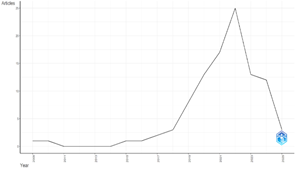
Fig 1: Annual scientific production
Geographical distribution of scientific production
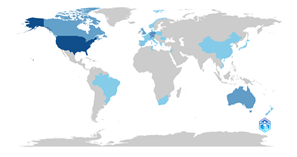
Data analysis reveals that the United States, with 121
articles, holds the largest share of scientific production. It is followed by
Germany with 54 articles, Australia with 45 articles, and both Canada and the
United Kingdom with 41 articles each (Table 1). All countries that contributed
to the production of these articles are shown in Fig 2, from dark blue (most
activity) to light blue (least activity).
Table 1: Top 10 countries in article production
|
Rank
|
Region
|
n
|
|
1
|
USA
|
121
|
|
2
|
GERMANY
|
54
|
|
3
|
AUSTRALIA
|
45
|
|
4
|
CANADA
|
41
|
|
5
|
UK
|
41
|
|
6
|
SWITZERLAND
|
35
|
|
7
|
NETHERLANDS
|
16
|
|
8
|
SINGAPORE
|
12
|
|
9
|
SPAIN
|
7
|
|
10
|
FRANCE
|
5
|
Fig 2: Country scientific production
Keywords of articles
Network analysis of key themes (Fig 3) shows that the
reviewed articles are grouped into seven distinct clusters. Major clusters
include topics such as “artificial intelligence” and “ethics”. These two words
play the most important role in their cluster. There are various connections
and links between clusters.
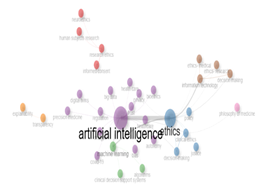
Fig 3: Co-occurrence network of keyword
Frequent keyword analysis
The word cloud map reveals that terms such as
"ethics," "machine learning," "information
technology," "clinical ethics," "privacy," and
"informed consent" appeared most frequently in the article texts. Other
frequently used words and topics in this area can be seen in Fig 4.
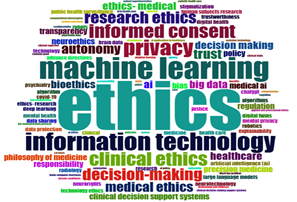
Fig 4: WordCloud map of keywords
Analysis of journals and sources
Among the reviewed sources (Table 2), the “JOURNAL OF
MEDICAL ETHICS” (IF = 3.3/Q = 1), “AMERICAN JOURNAL OF BIOETHICS” (IF = 17/Q =
1), and “BMC MEDICAL ETHICS” (IF = 3/Q = 1) journals produced the most cited
articles with 21, 14, and 14, respectively.
Top authors
In Table 3, the top ten authors are presented with the
most cited article in the field of artificial intelligence and medical ethics.
"Salloch S" has been the most active in the field with 7 polished
articles. As can be seen in Table 3, in the next position, the nine authors are
in the next rank with three articles. Among these authors, "JONGSMA
KR" has received the highest citation (Total Citation = 303) with three
articles. In the next position "Grote T" and "Braun M" are
with 251 and 152 cite, respectively. "IENCA M", one of the top ten
authors, published its first article in 2019, and "Earp BD" begun its
articles in 2024.
Web of science categories
Fig 5 shows the co-occurrence network between Web of
Science categories. This image shows the 100 most cited articles in the fields
of medical ethics and artificial intelligence classified by categories and shows
the relationships between them. As can be seen in the figure, there are two
main clusters, the main categories of these articles being Ethics, Medical
Ethics, and Social Science, Biomedical, with strong relationships between them.
Table 2: Journals that have published 100 highly
cited articles
|
Rank
|
Sources
|
Articles
|
IF
|
Quartile
|
|
1
|
JOURNAL OF MEDICAL ETHICS
|
21
|
3.3
|
Q1
|
|
2
|
AMERICAN JOURNAL OF BIOETHICS
|
14
|
17
|
Q1
|
|
3
|
BMC MEDICAL ETHICS
|
14
|
3
|
Q1
|
|
4
|
BIOETHICS
|
13
|
1.7
|
Q2
|
|
5
|
NEUROETHICS
|
8
|
2.6
|
Q1
|
|
6
|
HASTINGS CENTER REPORT
|
7
|
2.3
|
Q1
|
|
7
|
JOURNAL OF LAW AND THE
BIOSCIENCES
|
5
|
2.5
|
Q1
|
|
8
|
ASIAN BIOETHICS REVIEW
|
4
|
1.3
|
Q3
|
|
9
|
JOURNAL OF BIOETHICAL INQUIRY
|
3
|
1.8
|
Q2
|
|
10
|
JOURNAL OF LAW MEDICINE &
ETHICS
|
2
|
1.6
|
Q1
|
|
11
|
RESEARCH ETHICS
|
2
|
2.1
|
Q2
|
|
12
|
SOUTH AFRICAN JOURNAL OF
BIOETHICS AND LAW
|
2
|
0.5
|
Q4
|
|
13
|
ACCOUNTABILITY IN
RESEARCH-POLICIES AND QUALITY ASSURANCE
|
1
|
2.8
|
Q1
|
|
14
|
ETHICS OF MEDICAL DATA DONATION
|
1
|
-
|
-
|
|
15
|
ETHIK IN DER MEDIZIN
|
1
|
0.5
|
Q4
|
|
16
|
JOURNAL OF EMPIRICAL RESEARCH ON
HUMAN RESEARCH ETHICS
|
1
|
1.7
|
Q2
|
|
17
|
LINACRE QUARTERLY
|
1
|
0.4
|
Q4
|
Table 3: Top 10 authors
|
Authors
|
h_index
|
g_index
|
m_index
|
TC
|
NP
|
PY_start
|
|
SALLOCH S
|
7
|
7
|
1.4
|
150
|
7
|
2021
|
|
BILLER-ANDORNO N
|
3
|
3
|
0.75
|
71
|
3
|
2022
|
|
BRAUN M
|
3
|
3
|
0.6
|
152
|
3
|
2021
|
|
CARTER SM
|
3
|
3
|
0.5
|
50
|
3
|
2020
|
|
EARP BD
|
3
|
3
|
1.5
|
65
|
3
|
2024
|
|
GROTE T
|
3
|
3
|
0.5
|
251
|
3
|
2020
|
|
IENCA M
|
3
|
3
|
0.429
|
122
|
3
|
2019
|
|
JONGSMA KR
|
3
|
3
|
0.5
|
303
|
3
|
2020
|
|
SAVULESCU J
|
3
|
3
|
0.6
|
76
|
3
|
2021
|
|
URSIN F
|
3
|
3
|
0.75
|
51
|
3
|
2022
|
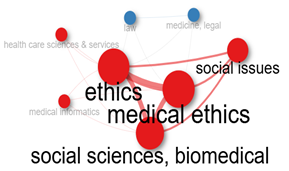
Fig 5: Co-occurrence network between web of science
categories
discussion
The findings of this study indicate the growing attention
toward the topic of “Artificial Intelligence and Medical Ethics” in recent
years.
An analysis of the temporal distribution of scientific
output shows that publications began in 2009 and have continued with
fluctuations up to 2025. In the early years (2009 to 2013), the number of
articles was very limited, but from 2014 onwards, a growing trend was evident. Since
2018, and especially in 2022, there has been a noticeable increase in
scientific publications in this field. This trend is particularly linked to the
increased use of machine learning and AI algorithms in medicine and the resulting
need to explore their ethical and social implications. Previous studies have
also shown that new technologies in medicine introduce many ethical challenges,
particularly in areas such as clinical decision-making and patient privacy [10, 11]. The rapid growth of AI
technologies has therefore drawn considerable attention from researchers toward
their ethical dimensions [12].
The annual scientific growth rate of 7.11% highlights the
dynamic nature and attractiveness of this subject. However, as seen in other
research areas, this growth might be challenged by the need for scientific
validation and practical feedback in clinical settings. In the field of
medicine, ethical research related to emerging technologies must continuously
align with clinical needs and the perspectives of physicians and patients in
order to support the practical application of these technologies [11].
The findings showed that the United States, the United
Kingdom, Germany, Canada, and Australia are the leading contributors to the
body of research in this area, indicating a significant geographical
concentration in this research domain. This concentration reflects the strong
research infrastructure and substantial financial investment of developed
countries in the advancement of AI in healthcare. Similar studies in other
areas of medical science and bioethics have also shown that countries with
robust research and support systems are more likely to lead in knowledge
production [13]. This may be due to greater investments in
bioethical studies and interdisciplinary research, reinforced by strong
research policies, advanced scientific infrastructure, and active international
collaborations [14].
Network analysis of themes and frequent keywords revealed
that most of the articles are focused on issues related to artificial
intelligence, ethics, machine learning, clinical ethics, and information
technology. This focus is particularly important and necessary in the context
of medical AI, as the use of complex algorithms in clinical decisions may
create challenges related to responsibility and ethical issues. Previous
studies have also noted that trust in AI systems in medicine is one of the most
important challenges to the acceptance of such technologies among both patients
and healthcare professionals [15].
Publications like “Journal of Medical Ethics”, “American Journal
of Bioethics”, and “BMC Medical Ethics” are recognized for their exceptional
quality and original research contributions. Other journals were also
identified as high-quality and high-ranking journals that have contributed to
the publication of 100 highly cited articles in the fields of artificial
intelligence and medical ethics. This high standard leads to their articles
being referenced as credible sources in other studies. The topics explored in
these journals are often timely and significant, further boosting their
citation rates. Journals that rank in higher quartiles typically garner greater
interest from researchers, resulting in increased citations for the articles
they publish [16].
In total, 350 authors have been involved in the
production of the top 100 highly cited articles in artificial intelligence and
medical ethics, with 28 % of international cooperation being among the authors.
The first highly cited article in this field is published by Tamburrini in Year
2009. 311 authors collaborated in producing one article, 29 people published 2
articles, 9 people published 32 articles, and one has contributed to the
publication of 7 artificial intelligence and medical ethics articles. The
extent of collaboration emphasizes how global scientific research encourages a
variety of perspectives and methodologies [17, 18].
In the analysis of the categories of the 100 most cited
articles, it is noteworthy that there are categories in the fields of law,
ethics, medical ethics, social media, social issues, and health services that
are related to the branches of medical informatics and artificial intelligence.
The existence of ethics in the field of medicine and, on the other hand, the
relationship of artificial intelligence in it is due to the need to pay
attention to different aspects and perspectives, which is indicated by the
presence of these articles in related categories [19, 20].
Conclusion
Overall, this study demonstrates that “Artificial
Intelligence and Medical Ethics” is an emerging and dynamic research area
within modern medicine that continues to pose significant ethical challenges. Researchers'
attention to the field of medical ethics and artificial intelligence indicates
the importance of this field and the need for special attention to it so the
number of top articles in this field has increased in recent years, which
indicates its value and importance. Moving forward, research must focus
particularly on the development of ethical and accountable algorithms, and
thoroughly examine human-technology interactions in smart medical environments.
These efforts will undoubtedly contribute to the ethical and practical
advancement of AI in medicine and lead to improved quality in clinical
decision-making.
Author’s contribution
SBA: Writing original draft, review, and editing; SAFA:
investigation, review, and editing; SB: Writing original draft, review, and
editing; VV: Writing original draft, review, and editing, AH: Analysis, data
curation, conceptualization, supervision, project administration, writing
original draft, review, and editing.
All authors contributed to the read and approved the
final manuscript.
Conflicts of interest
The authors declare no conflicts of interest regarding
the publication of this study.
Ethical Approval
Not Applicable.
Financial disclosure
No financial interests related to the material of this
manuscript have been declared.
References
1.
Singh S, Healy NA. The top 100 most-cited articles
on artificial intelligence in breast radiology: A bibliometric analysis. Insights
Imaging. 2024; 15(1): 297. PMID: 39666106 DOI: 10.1186/s13244-024-01869-4
[PubMed]
2.
Maassen O, Fritsch S, Palm J, Deffge S, Kunze J,
Marx G, et al. Future medical artificial intelligence application requirements
and expectations of physicians in German university hospitals: Web-based
survey. J Med Internet Res. 2021; 23(3): e26646. PMID: 33666563 DOI: 10.2196/26646
[PubMed]
3.
Jiang X, Wells A, Brufsky A, Neapolitan R. A
clinical decision support system learned from data to personalize treatment
recommendations towards preventing breast cancer metastasis. PLoS One. 2019; 14(3):
e0213292. PMID: 30849111 DOI: 10.1371/journal.pone.0213292
[PubMed]
4.
Patil B, Upadhyay S, Pawar A. Integrating artificial
inteligence and healthcare: Diagnostics and treatment outcome. International
Research Journal of Modernization in Engineering Technology and Science. 2024; 6(4):
15-22.
5.
Mitra PK, Mitra P, Ghosh T. Medical ethics amongst medical
intern students: A study from the eastern part of India. Global Bioethics
Enquiry. 2017; 5(2): 73-7.
6.
Ranasinghe AW, Fernando B, Sumathipala A,
Gunathunga W. Medical ethics: knowledge, attitude and practice among doctors in
three teaching hospitals in Sri Lanka. BMC Med Ethics. 2020; 21(1): 69. PMID: 32758219 DOI: 10.1186/s12910-020-00511-4 [PubMed]
7.
Karimian G, Petelos E, Evers SM. The ethical issues
of the application of artificial intelligence in healthcare: A systematic
scoping review. AI and Ethics. 2022; 2(4): 539-51.
8.
Tang L, Li J, Fantus S. Medical artificial
intelligence ethics: A systematic review of empirical studies. Digit Health.
2023; 9: 20552076231186064. PMID: 37434728 DOI: 10.1177/20552076231186064
[PubMed]
9.
Bailey Z, Mahoney P, Miron M, Bricknell M. Thematic
analysis of military medical ethics publications from 2000 to 2020: A
bibliometric approach. Mil Med. 2022; 187(7-8): e837-45. PMID:
34331064 DOI: 10.1093/milmed/usab317
[PubMed]
10.
Floridi L, Cowls J, Beltrametti M, Chatila R,
Chazerand P, Dignum V, et al. AI4People - an ethical framework for a good AI
society: Opportunities, risks, principles, and recommendations. Minds Mach
(Dordr). 2018; 28(4): 689-707. PMID: 30930541 DOI: 10.1007/s11023-018-9482-5
[PubMed]
11.
Morley J, Machado CC, Burr C, Cowls J, Joshi I,
Taddeo M, et al. The ethics of AI in health care: A mapping review. Soc Sci
Med. 2020; 260: 113172. PMID: 32702587 DOI: 10.1016/j.socscimed.2020.113172
[PubMed]
12.
Mittelstadt BD, Allo P, Taddeo M, Wachter S,
Floridi L. The ethics of algorithms: Mapping the debate. Big Data &
Society. 2016; 3(2): 2053951716679679.
13.
Secinaro S, Calandra D, Secinaro A, Muthurangu V,
Biancone P. The role of artificial intelligence in healthcare: A structured
literature review. BMC Med Inform Decis Mak. 2021; 21(1): 125. PMID: 33836752 DOI: 10.1186/s12911-021-01488-9 [PubMed]
14.
Haeussler C, Sauermann H. Division of labor in
collaborative knowledge production: The role of team size and
interdisciplinarity. Research Policy. 2020; 49(6): 103987.
15.
Murphy K, Di Ruggiero E, Upshur R, Willison DJ,
Malhotra N, Cai JC, et al. Artificial intelligence for good health: A scoping
review of the ethics literature. BMC Med Ethics. 2021; 22(1): 14. PMID: 33588803 DOI: 10.1186/s12910-021-00577-8 [PubMed]
16.
Asan A, Aslan A. Quartile scores of scientific
journals: Meaning, importance and usage. Acta Medica Alanya. 2020; 4(1): 102-8.
17.
Hami A, Khazaee-Nasirabadi MH, Mirzaee Khalilabadi
R, Bazi A, Mousavi Sh, Sadatmoosavi A. The scientometric analysis of
highly-cited articles in hematology published from 2010 to 2020. Journal of
Medical Library and Information Science. 2024; 5: e58.
18.
Azadi Ahmadabadi G. Examining the effects of
various scientific collaborations on the quality of Iranian scientific
publications in biotechnology. Caspian Journal of Scientometrics. 2023; 10(2):
65-76.
19.
Busch F, Adams LC, Bressem KK. Biomedical ethical
aspects towards the implementation of artificial intelligence in medical
education. Med Sci Educ. 2023; 33(4): 1007-12. PMID: 37546190 DOI: 10.1007/s40670-023-01815-x
[PubMed]
20.
Jobin A, Ienca M, Vayena E. The global landscape of
AI ethics guidelines. Nature Machine Intelligence. 2019; 1(9): 389-99.